

Ethylene Glycol is an organic chemical compound with suitable viscosity and desirable thermal stability, delivering reliable performance across a wide temperature range. By lowering the freezing point and raising the boiling point of water, it plays a key role in cooling systems, antifreeze formulations, and heat transfer fluids. Its complete miscibility with water, uniform behavior, and favorable chemical compatibility provide stability against decomposition, evaporation, and temperature fluctuations. Relative resistance to oxidation and compatibility with many metals and polymers have led to its widespread use in the automotive industry, petrochemical applications, resin production, polyester fibre production, and industrial fluids. Industrial availability, high formulation flexibility, and effective performance efficiency are considered among the main advantages of ethylene glycol.
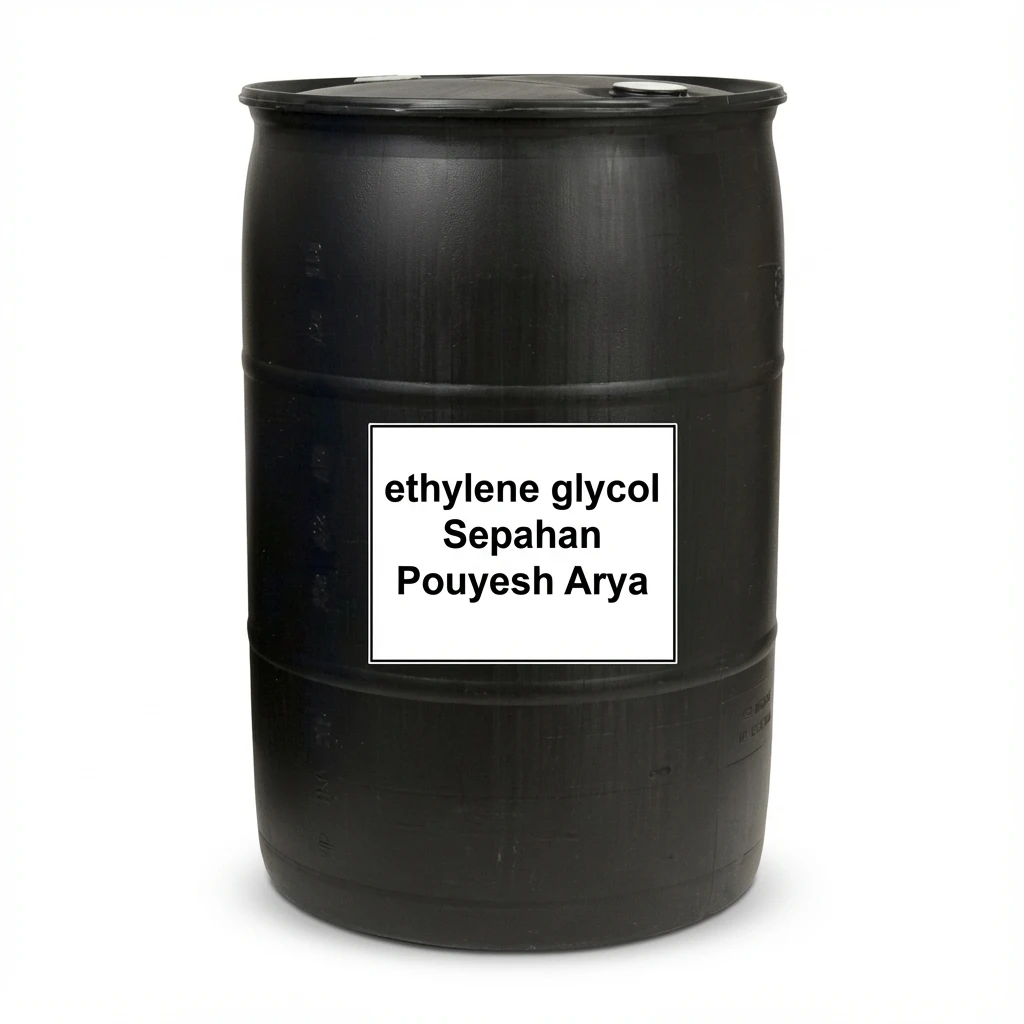
Ethylene glycol, with its stable molecular structure and controlled purity, is regarded as a reliable, engineered fluid suitable for sensitive operating conditions across a wide temperature range. By effectively lowering the freezing point and increasing the boiling point, it delivers stable performance in cooling systems and heat transfer applications. Appropriate viscosity, complete miscibility with water, and high chemical compatibility ensure resistance to thermal fluctuations, oxidation, and performance degradation. The stability of the physical and chemical properties of ethylene glycol reduces replacement frequency and extends equipment service life. Its widespread use in automotive industries, petrochemical applications, and the production of resins and polyesters—combined with high formulation flexibility and consistent industrial availability—significantly enhances overall process efficiency.
Ethylene glycol is among the most widely used industrial chemical compounds and, due to its simple molecular structure and high proportion of hydroxyl (–OH) functional groups, provides stable and reliable performance across a wide range of operating conditions. Enhancing purity levels and precise control of its physical and chemical specifications significantly improve its thermal properties, fluidity, and overall stability; therefore, the selection of an appropriate ethylene glycol grade for different applications is based precisely on these parameters.
High demand for ethylene glycol arises from its effective ability to lower the freezing point, raise the boiling point, resist evaporation, and maintain performance under severe temperature fluctuations. This material also exhibits excellent chemical compatibility with water, many additives, metals, and polymers, while demonstrating controlled thermal degradation resistance, oxidation stability, and minimal property loss during long‑term operating conditions.
Ethylene glycol is commonly produced and classified in various industrial and semi‑industrial grades with different purity levels. High-purity industrial grades, characterised by uniform viscosity and effective molecular structure, are considered an ideal choice for use in antifreeze formulations, heat transfer fluids, industrial cooling systems, polyester fibre production, resins, and the petrochemical industry, providing stable, economical, and long-term performance.
High‑purity ethylene glycol, in addition to delivering stable performance across a wide temperature range, offers outstanding thermal properties and fluidity under demanding operating conditions. These characteristics enable exceptional resistance to temperature fluctuations, performance degradation, evaporation, and oxidation in cooling systems, antifreeze formulations, and heat transfer fluids. Such properties make it an ideal choice for the automotive industry, petrochemical applications, resin and polyester production, and other sensitive industrial units, contributing to extended equipment service life and improved process efficiency.
Our company supplies ethylene glycol produced from high‑quality chemical feedstock and manufactured under strict process control in compliance with international standards. Supported by our experienced technical and engineering team, we ensure on‑time delivery, expert consultation for selecting the appropriate grade, and continuous technical support—providing effective solutions for performance optimisation and reduced maintenance costs. By choosing our ethylene glycol, you secure operational stability, longer equipment lifespan, and measurable economic savings; we are your reliable chemical partner in the industry.
| Ethylene glycol | |||
|---|---|---|---|
| Analysis | Specification | Parameter | S.No |
| Complies | Clear Colorless Liquid | Appearance | 1 |
| Complies | Complete | Miscibility in Water | 2 |
| 5.0 | 15.0 Max | Color (Hazen) | 3 |
| 0.93 | 0.928 – 0.931 | Relative Density @ 20°C | 4 |
| 1.4071 | 1.4070 – 1.4090 | Refractive Index @ 20°C | 5 |
| 0.05 | 0.10 Max | Moisture (w/w) (%) | 6 |
| 0.0017 | 0.010 Max | Acidity as Acetic Acid (%) | 7 |
| 99.83 | 99.00 Min | Purity by GC (%) | 8 |
| <0.0010 | 0.0010 Max | Residue on Evaporation (w/w) (%) | 9 |
| 134 | 133.5 Min | Distillation Range @ 101.3 kPa (IBP) °C | 10 |
| 136 | 136.5 Max | Distillation Range @ 101.3 kPa (DP) °C | 11 |
| >4.0 | 4.0 Min | Flash Point (Close Cup) °C | 12 |

WhatsApp us


