


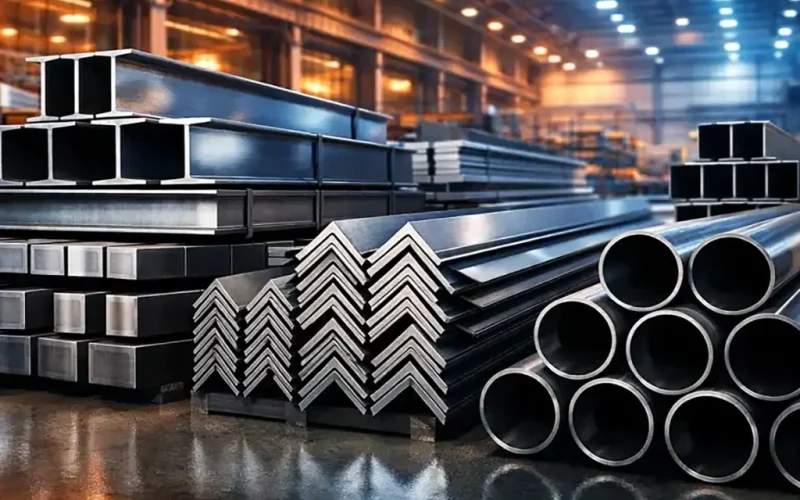


If you are planning to **buy steel sections**, you should know that this field is not limited to simply choosing a few metal products. Steel sections form the backbone of construction, industrial, civil engineering, oil and gas, infrastructure, machinery manufacturing, and equipment production projects. For this reason, the decision to purchase these products must be based on a clear understanding of the type of section, production standards, dimensions, weight, manufacturing method, producing mill, current market price, delivery conditions, mechanical properties, weldability, quality control documentation, and overall market trends.
In this comprehensive and specialized article, we examine all the key topics related to purchasing steel sections; from explaining **what steel sections are and the different types of steel sections**, to analyzing **structural steel sections and industrial steel sections**, reviewing **hot‑rolled steel sections**, understanding **steel section standards**, the role of **Stahl tables for steel sections**, calculating **steel section weight**, evaluating **steel section dimensions**, analyzing **steel section prices and daily market prices**, introducing **steel section manufacturers and production plants**, discussing **steel section sales conditions**, exploring **steel section export channels**, examining the role of **steel sections in commodity exchanges**, and highlighting the importance of **steel section trading companies and steel section catalogs** in a professional purchasing process.
### What Are Steel Sections? Definition, Role, and Importance in Industry
To begin with, it is important to clearly explain **what steel sections are**. Steel sections are steel products with a defined and standardized cross‑section that are manufactured in specific lengths and used in structures, equipment, machinery, and both industrial and construction projects. These sections can be open or closed, heavy or light, structural or industrial, rolled or fabricated.
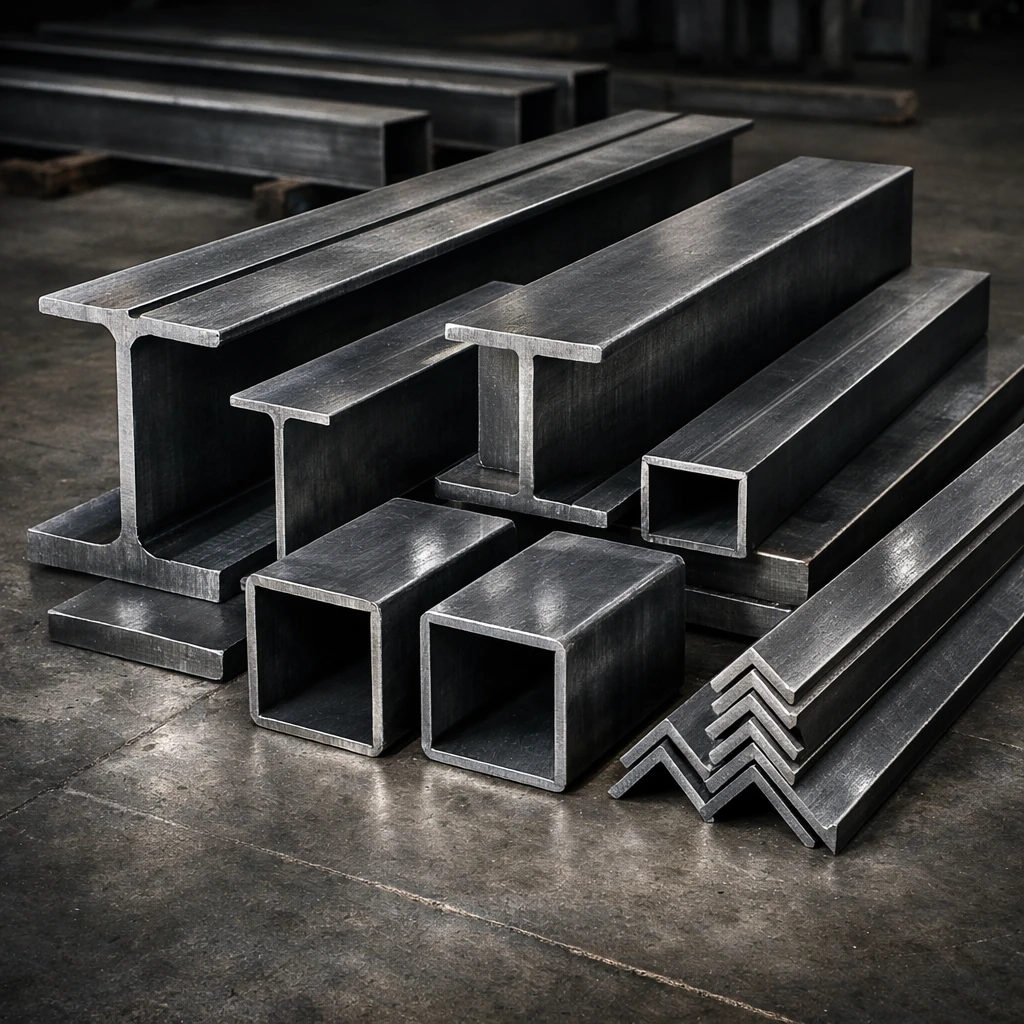
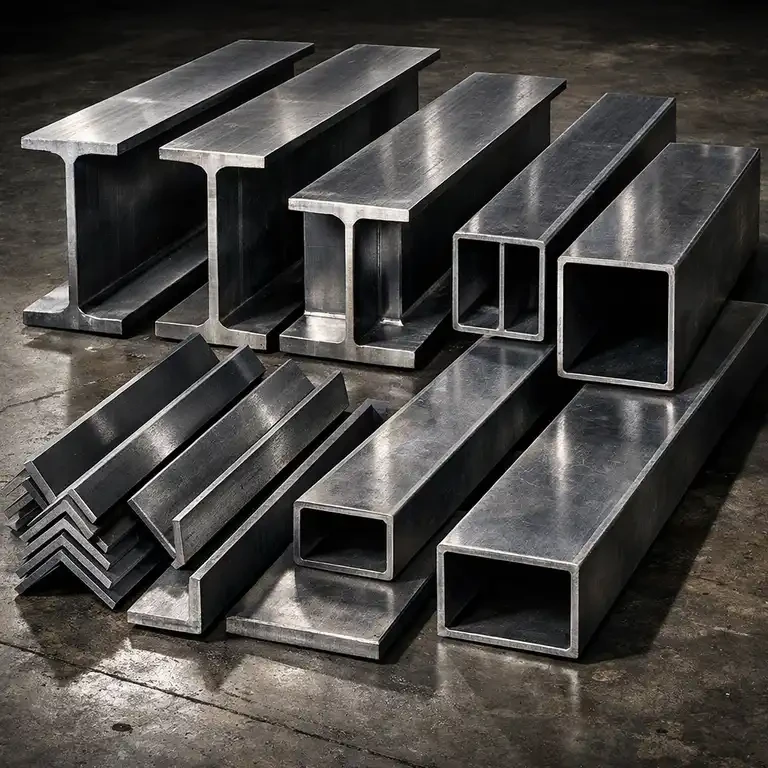
Their importance comes from the fact that almost no civil or industrial project can proceed without the use of one or more types of steel sections. From **I‑beams, channels, and angles** to **square and rectangular tubes, industrial bars, H‑beams, rails, T‑sections, cut plates, structural pipes, and other engineered shapes**, all belong to the broad family of steel sections.
In the professional market, **buying steel sections is both a technical and commercial process**. This means the buyer must understand not only the engineering requirements of the project but also the logic of the market, pricing mechanisms, transportation conditions, product authenticity, standards, and inspection documentation. For this reason, this article provides a deeper and more practical perspective rather than a superficial overview.
### Types of Steel Sections: Understanding the Main Market Categories
Understanding the **types of steel sections** is the first step toward making a correct and low‑risk purchase. Steel sections can be categorized from several perspectives.
**Based on cross‑section shape**
– I and H beams
– Angles
– Channels
– T‑sections
– Hollow sections and profiles
– Steel bars
– Pipes and tubes
– Rails
– Specialized industrial sections
**Based on application**
– Structural steel sections
– Industrial steel sections
**Based on manufacturing method**
– Hot‑rolled steel sections
– Cold‑formed sections
– Fabricated or welded sections
**Based on standards**
– Sections produced according to national standards
– Sections manufactured according to international standards such as **DIN, EN, ASTM, and JIS**
This classification is important because each category has different **technical characteristics, weight, strength, pricing, and applications**. A professional buyer must understand that purchasing **angles for light structures**, **beams for steel frames**, or **profiles for chassis manufacturing** involves completely different technical and commercial considerations.
### Structural Steel Sections: The Foundation of Construction Projects
**Structural steel sections** are those mainly used in buildings, industrial halls, bridges, steel structures, and civil engineering projects. These sections must usually meet requirements related to **load‑bearing capacity, structural strength, weldability, and compliance with structural design codes**.
The most common structural steel sections include:
– I‑beams
– H‑beams
– Angles
– Channels
– Reinforcing bars
– Structural hollow sections and profiles
– Cut structural plates
When purchasing these products, appearance or nominal weight alone is not sufficient. Buyers must also pay attention to **steel section standards, dimensional tolerances, chemical composition, mechanical properties, and the manufacturer’s brand**.
### Industrial Steel Sections: Beyond Construction Structures
**Industrial steel sections** are used in machinery manufacturing, factory equipment, oil and gas facilities, shipbuilding, automotive manufacturing, transmission lines, heavy equipment, tank production, industrial frames, and many other specialized applications.
This category often requires greater technical precision because, in addition to general strength, they may require characteristics such as:
– Machinability
– Specialized weldability
– High yield strength
– Fatigue resistance
– Tight dimensional tolerances
– High surface quality
– Forming and cutting capability
As a result, purchasing **industrial steel sections** usually requires careful review of **technical catalogs and quality control certificates**.
### Hot‑Rolled Steel Sections: The Most Common Market Category
One of the most common terms in the steel market is **hot‑rolled steel sections**. In the hot‑rolling process, steel billets or blooms are passed through rollers at high temperatures to form the final cross‑section shape. Many widely used products such as **I‑beams, channels, angles, and certain profiles** are produced using this method.
**Advantages of hot‑rolled sections**
– Economical production at high volumes
– Wide range of available dimensions
– Suitable for structural applications
– Better market availability
– Production according to common international standards
**Important considerations when buying hot‑rolled sections**
– Surface uniformity
– Twisting or warping
– Thickness and dimensional tolerances
– Edge quality
– Compliance of actual weight with standard tables
– Reputation of the manufacturing mill
### Steel Section Standards: The Foundation of Reliable Purchasing
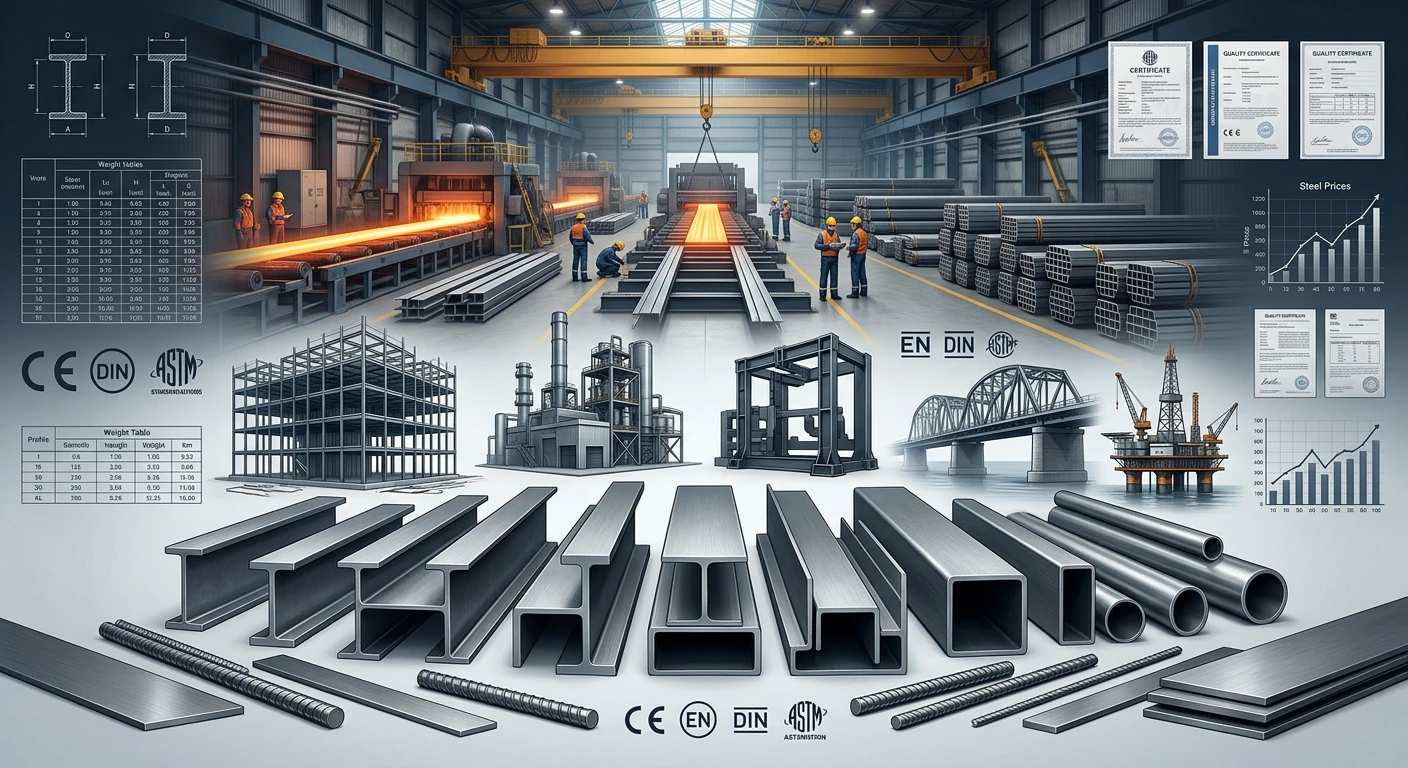
If we had to name the most critical factor in purchasing steel sections, it would be **steel section standards**. Standards determine the product’s requirements in terms of:
– Dimensions
– Weight
– Tolerances
– Chemical composition
– Mechanical properties
– Testing methods
– Identification and marking systems
**Major reference standards include**
– DIN
– EN
– ASTM
– ISO
– JIS
– National standards such as **ISIRI in Iran**
For example, a beam or channel might appear dimensionally close to the standard but have mechanical properties below the required specification. In sensitive projects, such products may not be acceptable. Therefore, professional buyers must verify both the **physical dimensions of steel sections and their actual mechanical performance**.
Steel Section Sales: Price Announcement Alone Is Not Enough
In the steel section sales market, a professional supplier is not defined solely by offering competitive prices. Beyond pricing, a reliable seller should provide:
- Transparent technical specifications
- Clear declaration of brand and manufacturing mill
- Real, verifiable inventory
- Defined delivery timelines
- Catalogs or technical datasheets
- Quality control documentation
- Product selection consultancy
- Precise logistics coordination
In reality, steel sales in the B2B market are a technical–commercial service, not merely the issuance of a proforma invoice. Serious buyers expect technical clarity, supply reliability, and logistical precision—not just a number per kilogram.
Steel Section Manufacturers: Why the Mill Name Matters
Steel section manufacturers play a decisive role in determining product quality, dimensional consistency, weight accuracy, mechanical strength, and overall credibility. In the market, the name of the mill can directly influence buyer confidence and even pricing.
Why the manufacturer matters
- Raw material quality varies between mills
- Production equipment and line precision differ
- Quality control systems are not identical
- Some brands adhere more strictly to specific standards
- Continuous supply capability is not equal across producers
In major or sensitive projects, the manufacturer’s brand is often specified as part of the purchase requirements.
Steel Section Production Plants: Market‑Oriented Evaluation
Steel section production plants, both in Iran and globally, typically specialize in one or several product categories. Some are stronger in I‑beams and H‑beams, others in hollow sections and profiles, some in angles and channels, and others in specialized industrial sections.
When evaluating a mill, the following criteria should be considered:
- Diversity of product portfolio
- Production capacity
- Quality consistency
- Geographic accessibility
- Sales and after‑sales support
- Ability to provide test certificates and quality documentation
- Market track record
- Acceptance in large‑scale projects
A thorough supplier assessment reduces procurement risk and ensures long‑term reliability.
Steel Section Trading Companies: The Critical Link Between Mill and End‑User
Many buyers do not purchase directly from mills but instead work through steel section trading companies. When professional and well‑structured, these companies create significant advantages:
- Aggregating inventory from multiple mills
- Faster access to market supply
- Mixed supply of multiple section types
- Technical and commercial advisory services
- Facilitated logistics and distribution
- Flexible sales terms
However, buyers must ensure that the trading company is not merely a price intermediary, but a supplier with genuine sourcing capability, logistical coordination, and after‑sales support.
Steel Section Catalogs: A Document That Should Not Be Ignored
A steel section catalog is one of the most important tools in professional procurement. It typically includes:
- Nominal dimensions
- Thickness ranges
- Weight per meter or per piece
- Production standards
- Geometric properties
- In some cases, mechanical properties
- Marking and identification methods
Using the official catalog helps buyers accurately match products to project requirements and avoid common ordering mistakes such as incorrect thickness, mismatched dimensions, or non‑compliant standards.
Steel Sections in the Commodity Exchange: A Key Tool for Price Discovery and Transparency
The steel section commodity exchange serves as an important mechanism for improving market transparency in Iran. Many professional market participants use exchange data to analyze pricing trends, supplier behavior, and demand conditions.
Advantages of the commodity exchange
- Relative transparency in transactions
- Price discovery based on supply and demand
- Market trend monitoring
- Reduction of certain pricing ambiguities
- Analytical benchmark for industry participants
However, the exchange transaction price is not necessarily equal to the final delivered cost to the end user, as transportation, warehousing, taxation, and distribution margins must also be added.
Steel Section Exports: A Major Opportunity for the Professional Market
The export of steel sections represents a strategic and foreign‑currency–generating opportunity for both manufacturers and trading companies. However, success in export markets requires strict compliance with the requirements of the destination market.
Key export requirements
- Compliance with recognized international standards
- Consistent and uniform product quality
- Proper packaging and marking
- Third‑party inspection certificates
- Reliable and continuous supply capability
- Competitive pricing
- Full alignment with the engineering specifications of the foreign buyer
In export transactions, seemingly small details—such as dimensional tolerances, bar length, packaging method, or mechanical testing procedures—can determine whether a deal succeeds or fails.
Professional Resources for Steel Section Market Analysis and Procurement
For deeper market insight and better decision‑making when purchasing steel sections, relying on credible professional sources is essential. Some of the most important reference sources include:
- World Steel Association – Global steel industry data and statistics
- OECD Steel Outlook – Analysis of capacity, policy trends, and global steel outlook
- Platts / S&P Global Commodity Insights – Steel price benchmarks and market analysis
- Fastmarkets – Commercial pricing data and steel trade insights
- ASTM, EN, and DIN standards – Technical standards for steel products
- AISC Manual and structural steel design references
- Stahl tables for geometric properties of steel sections
- Official catalogs of steel section manufacturers
- Commodity exchange data for monitoring domestic transactions and price trends
Using these resources ensures that procurement and market analysis are based on verified data rather than informal market rumors.
A Professional Strategy for Purchasing Steel Sections in a Volatile Market
In markets where daily steel section prices fluctuate continuously, an effective purchasing strategy often includes the following approaches:
- Phased purchasing instead of a single large transaction
- Daily monitoring of market prices and supply conditions
- Requesting quotations from several reliable suppliers
- Comparing final delivered cost, not just base price per kilogram
- Selecting reputable manufacturing mills
- Aligning purchase specifications with engineering drawings and calculations
- Maintaining weighbridge records and quality inspection reports
- Conducting trial purchases for sensitive or critical projects
These practices help reduce procurement risks and improve cost control in volatile markets.
Conclusion: Purchasing Steel Sections Is a Technical–Commercial Decision
Ultimately, buying steel sections is not merely a simple transaction involving iron and steel. It is a combination of engineering decision‑making, quality assessment, price analysis, and supply chain management.
If a buyer does not clearly understand what steel sections are, how different types of steel sections vary, which products fall under structural or industrial categories, what the relevant standards are, and how to verify weight and dimensions, significant hidden costs can be imposed on a project.
Key Takeaways
- Steel section purchasing must be based on the exact application and engineering requirements
- Steel section prices can be misleading without verifying quality and actual weight
- Daily steel prices depend on billet markets, exchange rates, commodity exchanges, energy costs, and demand levels
- Stahl tables are useful for preliminary verification of weight and dimensions
- Steel section catalogs and Mill Test Certificates (MTC) are essential for professional procurement
- Manufacturers and production plants directly influence final product quality
- Steel section trading companies can simplify procurement if they are credible and capable
- Commodity exchange data is an important reference for analyzing market prices and supply
- Steel section exports require full compliance with standards and destination market requirements
- Hot‑rolled steel sections constitute a large portion of the market but must be carefully verified before purchase
The main difference lies in their type of application and the level of technical sensitivity involved.
When purchasing structural steel sections (such as I‑beams and reinforcing bars), the primary focus is on load‑bearing capacity, tensile strength, and compliance with structural engineering codes and standards.
However, for industrial steel sections, much more precise parameters become critical. These include machinability, specific weldability requirements, millimeter‑level dimensional tolerances, and resistance to fatigue or corrosion.
The Stahl table can be considered the standard identity card of steel sections. When you plan to purchase steel sections, this table tells you exactly what weight, thickness, and moment of inertia a standard beam or angle should have.
By comparing the actual weight of the delivered shipment with the values listed in the Stahl table, you can verify the authenticity of the product, confirm that the manufacturer has adhered to the required standards, and avoid paying extra for non‑standard steel.
Is purchasing hot-rolled steel sections suitable for all industrial projects?
Hot‑rolled steel sections are produced at high temperatures and in large volumes, which makes them more economical and widely available in different sizes. For this reason, they are an excellent choice for steel structures and general construction applications.
However, if your project requires a very smooth surface finish, specific formability at room temperature, or extremely precise dimensional tolerances, you may need to consider cold‑formed or machined steel sections instead of hot‑rolled ones when purchasing steel sections.
What impact does the difference between nominal weight and actual weight have on the cost of purchasing steel sections?
Since all transactions in the steel market are based on weight (kilograms or tons), even a difference of a few grams per meter can lead to significant costs when dealing with large tonnages.
In a professional steel section purchasing process, you should not rely solely on the weight declared by the manufacturer. Instead, the final price should be calculated and settled based on a certified weighbridge receipt and the actual measured weight of the delivered shipment.
How important is the choice of brand and manufacturer when purchasing steel sections?
Very much! Not all factories use the same billets, and their rolling equipment varies in precision. When purchasing steel sections for sensitive projects, the manufacturer’s name guarantees consistent quality, crack‑free weldability, and adherence to standard thickness along the entire length of the section. Reputable brands typically provide a quality certificate …
Is purchasing steel sections from the commodity exchange cost‑effective for the end consumer?
The commodity exchange is an excellent platform for price discovery and market transparency. However, purchasing steel sections through the exchange usually requires very large order volumes (heavy lots), and the buyer must also cover additional costs such as value‑added tax (VAT), brokerage fees, and transportation expenses.
Therefore, for many end users—especially those with smaller or more diverse purchasing needs—buying through reputable trading companies can often be more practical and cost‑efficient.
What is the advantage of purchasing steel sections from trading companies compared to buying directly from the mill?
Manufacturers typically sell only their own product portfolio and usually in bulk quantities.
However, the greatest advantage of purchasing steel sections from reputable trading companies is supply diversification.
You can order, within a single proforma invoice, I‑beams from one mill, pipes from another factory, and angles from a third brand, and have all of them delivered to your project site in one shipment. This results in significant savings in both time and transportation costs.
What factors cause daily price fluctuations in the process of purchasing steel sections?
What documents should we request from the seller to ensure quality when purchasing steel sections?
For a safe and reliable purchase—especially in engineering and construction projects—you should always request the Mill Test Certificate (MTC) from the seller.
This document, which is provided after purchasing the steel sections, contains detailed information on the product’s chemical composition (percentages of carbon, manganese, etc.) and its mechanical properties (yield strength and ultimate tensile strength).
The MTC is your primary proof that the material meets the required technical standards and is suitable for use in safety‑critical applications.
What are the most important hidden costs in purchasing steel sections that buyers should be aware of?
Many inexperienced buyers focus only on the quoted price per kilogram. However, in a smart steel section purchase, you must also account for hidden costs such as loading fees at the origin, transportation costs to the project site, unloading expenses, value‑added tax (VAT), and potential waste (material loss) caused by mismatches between the supplied lengths and the project’s execution drawings.
Ignoring these factors can significantly increase the final project cost.
